Finding water around the bottom of your toilet can be frustrating, especially when you're unsure where the leak is coming from. While a small puddle might not seem like a serious problem, moisture around your toilet can indicate a damaged seal, loose connection, or another plumbing issue that needs attention.
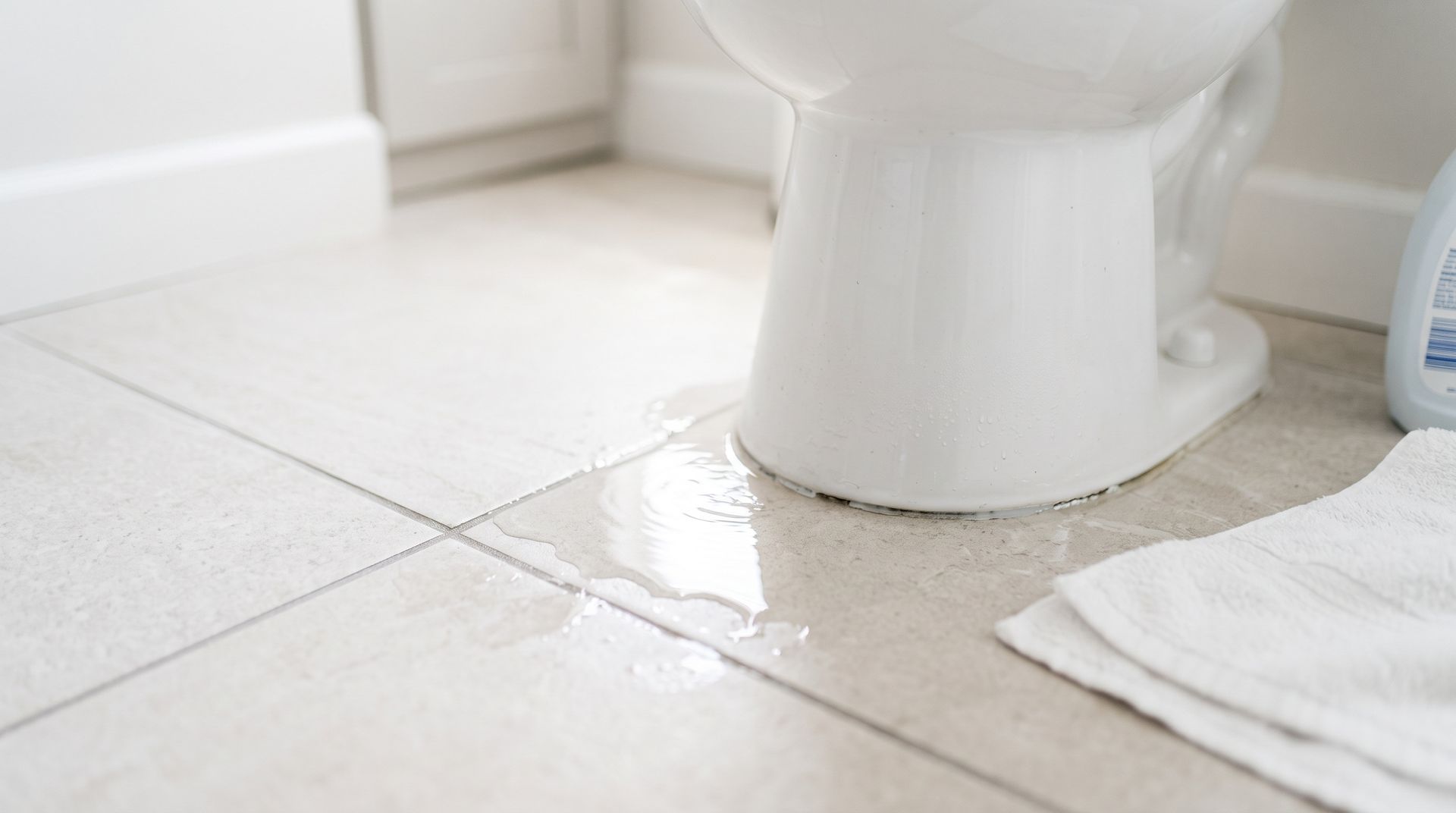
A toilet leaking at the base is often caused by a worn or damaged wax ring, loose mounting bolts, or a problem with the toilet flange. However, water from a leaking supply line, tank connection, or condensation can also collect around the bottom of the toilet.
For homeowners in East Stroudsburg, Stroudsburg, and the surrounding Pocono Mountains, identifying the source of a toilet leak early can help prevent water damage and expensive bathroom repairs.
What Causes a Toilet to Leak at the Base?
Several plumbing problems can cause water to accumulate around your toilet. Understanding the most common causes can help you recognize when professional repairs may be necessary.
1. A Damaged or Worn Wax Ring
One of the most common causes of a toilet leaking from the bottom is a failed wax ring.
The wax ring creates a watertight seal between the toilet and the drain flange beneath it. When this seal becomes damaged, compressed unevenly, or displaced, wastewater can escape onto the bathroom floor during flushing.
Common signs of a failed wax ring include:
- Water appearing around the toilet after flushing
- Unpleasant sewer odors near the toilet
- A toilet that rocks or shifts when someone sits on it
- Discoloration or moisture damage around the flooring
Wax rings are designed to create a dependable seal, but they may fail if the toilet moves or was installed incorrectly.
Replacing the wax ring typically requires removing the toilet, inspecting the flange, and reinstalling the fixture with a new seal.
2. Loose Toilet Mounting Bolts
Your toilet is secured to the floor flange using mounting bolts. These bolts help keep the fixture stable and maintain the seal beneath the toilet.
If the bolts become loose, the toilet may begin to shift slightly during normal use. Over time, this movement can compromise the wax ring and allow water to escape.
You may notice the toilet rocking when you sit down or water collecting near the base after flushing.
Although tightening the bolts might seem like a simple solution, excessive force can crack the porcelain toilet base. If the toilet is unstable, a professional plumber can inspect the mounting hardware and determine whether the seal also needs replacement.
3. A Cracked or Damaged Toilet Flange
The toilet flange connects the toilet to the drainpipe beneath the bathroom floor.
When the flange becomes cracked, corroded, or improperly positioned, it may no longer support the toilet or maintain a proper seal.
A damaged flange can cause recurring leaks even after the wax ring has been replaced.
Signs of a flange problem may include:
- A toilet that will not remain securely mounted
- Repeated water leaks around the base
- Visible movement or instability
- Moisture damage around the surrounding flooring
Repairing a damaged flange may involve replacing components or correcting its position before reinstalling the toilet.
4. Leaking Water Supply Connections
Not every puddle around a toilet originates beneath the fixture.
Sometimes, a leaking water supply line or loose connection allows clean water to travel down the toilet and collect near the floor.
The supply line connects your home's plumbing system to the toilet tank. If its fittings become loose or the line deteriorates, water may drip onto the surrounding surfaces.
Check for moisture around the shutoff valve, supply hose, and underside of the toilet tank.
If the water appears even when the toilet has not been flushed, a supply connection may be responsible.
For assistance identifying and repairing bathroom plumbing leaks, explore our Professional Plumbing Repair Services.
5. Cracks in the Toilet Bowl or Tank
Although less common, cracks in the porcelain can allow water to escape from the toilet.
Small cracks may be difficult to notice initially, especially when they develop near the base or underneath the tank.
Over time, these cracks can become larger and lead to ongoing leaks.
A cracked toilet bowl or tank may require replacement rather than a temporary repair. Continuing to use a damaged fixture can increase the risk of sudden leaks and additional water damage.
6. Condensation Around the Toilet
Sometimes, the moisture around your toilet isn't caused by a plumbing leak at all.
Condensation can form when cold water inside the toilet tank comes into contact with warm, humid bathroom air.
This moisture may run down the exterior of the tank and collect around the toilet base.
Condensation is more likely to occur during humid weather or in bathrooms with inadequate ventilation.
If moisture appears on the outside of the tank rather than immediately after flushing, condensation may be contributing to the problem.
How Can You Tell Where the Toilet Leak Is Coming From?
Before attempting repairs, it's important to identify the source of the water.
Start by drying the floor around the toilet with a towel. Then inspect the fixture for visible moisture.
Consider the following observations:
- Water appears after flushing: A damaged wax ring or flange may be responsible.
- Water appears without flushing: Check the supply line, tank connections, and shutoff valve.
- The toilet rocks or moves: Loose mounting bolts or flange damage may be affecting the seal.
- Moisture forms on the tank exterior: Condensation may be the cause.
- Water continues collecting despite drying the floor: An active leak may require immediate attention.
These observations can help narrow down the possibilities, but they may not confirm the exact cause.
If the water appears to be wastewater, avoid using the toilet until the issue has been inspected and repaired.
Can a Toilet Leak Damage Your Bathroom Floor?
Yes. Even a relatively small toilet leak can cause significant damage when moisture repeatedly reaches the flooring and subfloor.
Water may seep beneath vinyl, tile, or other bathroom flooring materials, where it can remain unnoticed.
Over time, persistent moisture can contribute to:
- Soft or deteriorating subfloor materials
- Loose or damaged flooring
- Mold and mildew growth
- Unpleasant odors
- Water stains on ceilings below upstairs bathrooms
- More extensive repair costs
A leaking toilet should not be ignored simply because the amount of visible water seems small.
Addressing the issue early can help protect your bathroom and reduce the likelihood of more extensive repairs.
Should You Repair a Leaking Toilet Yourself?
Some toilet problems, such as visible condensation or a loose supply connection, may be relatively easy to identify.
However, leaks originating beneath the toilet often require more involved repairs.
Replacing a wax ring typically involves disconnecting the water supply, removing the toilet, inspecting the flange, installing a new seal, and securing the fixture properly.
Improper installation can lead to additional leaks, cracked porcelain, or damage to the surrounding floor.
Professional plumbing service is especially important when:
- The toilet rocks or shifts
- Water repeatedly appears after flushing
- The floor around the toilet feels soft
- You notice sewer odors
- The flange appears damaged
- A previous repair did not stop the leak
Edwards Plumbing provides Plumbing Installation, Repair, and Replacement Services to help homeowners address these problems.
What Should You Do If Your Toilet Is Leaking?
If you discover water around the base of your toilet, taking a few precautions can help limit potential damage.
First, stop using the toilet if flushing causes water to leak onto the floor. Continued use can allow additional wastewater to escape.
Next, turn off the toilet's water supply valve if the leak is ongoing or the source is uncertain. The valve is typically located on the wall or floor behind the toilet.
Dry the surrounding area and inspect the visible connections for signs of moisture.
Avoid applying caulk around the toilet base as a way to stop an active leak. Caulk does not repair a failed wax ring or damaged flange and may conceal escaping water.
If the leak is severe, the flooring is damaged, or wastewater is escaping, contact a professional plumber.
Edwards Plumbing also offers Emergency Plumbing Services for urgent plumbing problems in the East Stroudsburg area and surrounding communities.
How Can You Prevent Future Toilet Leaks?
Although not every plumbing problem can be prevented, routine inspections and proper fixture maintenance can help reduce the likelihood of recurring leaks.
Homeowners should periodically check around toilets for moisture, pay attention to unusual movement, and address small plumbing problems before they become more serious.
A few helpful habits include:
- Inspecting the floor around the toilet for unexplained moisture
- Checking visible water supply connections for drips
- Avoiding excessive force when tightening toilet hardware
- Addressing a rocking toilet promptly
- Monitoring bathroom flooring for discoloration or soft spots
- Scheduling professional repairs when leaks return
Taking these steps can help protect your bathroom and maintain a reliable plumbing system.
Why does my toilet leak only when I flush?
If water appears around the toilet base only after flushing, the wax ring or flange seal may be damaged. Flushing sends wastewater through the drain connection beneath the toilet, where a compromised seal can allow water to escape.
Can a loose toilet cause a leak? bn
Yes. A toilet that rocks or shifts can damage the wax ring and create gaps in the seal. The mounting hardware and flange should be inspected to determine the appropriate repair.
Does a leaking toilet always need a new wax ring?
No. Although a failed wax ring is a common cause, leaks may also originate from the supply line, tank connections, cracked porcelain, or condensation. Identifying the actual source is important before replacing components.
Is water around the toilet base an emergency?
It depends on the source and severity of the leak. Active wastewater leaks, rapidly spreading water, or signs of structural damage should be addressed promptly. Stop using the toilet and contact a plumber if the leak cannot be safely contained.
Can I seal a toilet leak with caulk?
Caulk should not be used to repair a leaking toilet seal. It may hide moisture without addressing the underlying problem. A damaged wax ring, flange, or other plumbing component must be repaired directly.
Trust Edwards Plumbing for Toilet Leak Repairs in the Poconos
A toilet leaking at the base can be more than a minor inconvenience. Without proper repairs, escaping water may damage your bathroom flooring and create additional plumbing problems.
At Edwards Plumbing, we help homeowners throughout East Stroudsburg, Stroudsburg, and surrounding Pocono communities with dependable residential plumbing repairs and installations.
As a locally owned, family-operated plumbing company with more than 20 years of experience, we take pride in providing professional service, honest communication, and quality workmanship.
Whether your toilet needs a new seal, a flange repair, or a complete replacement, our team can help identify the problem and recommend an appropriate solution.
Don't let a leaking toilet cause unnecessary damage to your home. Call Edwards Plumbing at (570) 534-5731 or contact us online to request a free estimate.
Share this blog!